Zelda II: The Adventure of Link
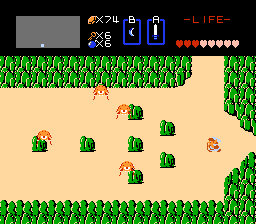
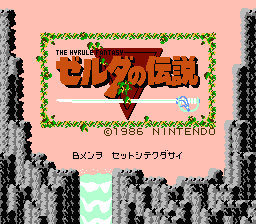
A small kingdom in the land of Hyrule, the setting of the game, is engulfed in chaos after an army led by Ganon, the Prince of Darkness, invaded it and stole the Triforce of Power, a part of a magical artifact bestowing great strength. In an attempt to prevent Ganon from acquiring the Triforce of Wisdom, another of the pieces, Princess Zelda splits it and hides the eight fragments in secret dungeons throughout the land. Before the princess is eventually kidnapped by Ganon, she commands her nursemaid Impa to find someone courageous enough to save the kingdom. While wandering the land, the old woman is surrounded by Ganon's henchmen, though a young boy named Link appears and rescues her. After hearing Impa's plea, he resolves to save Zelda and sets out to reassemble the scattered fragments of the Triforce of Wisdom, to become powerful enough to defeat Ganon. The Legend of Zelda incorporates elements of action, adventure, and role-playing games. The player controls Link from a flip-screen overhead perspective as he travels in the overworld, a large outdoor map with varied environments. Link begins the game armed only with a small shield, but a sword becomes available to Link after he ventures into a cave that is accessible from the game's first map screen. Throughout the game, various characters aid Link by giving or selling equipment and clues. These people can be found in caves scattered throughout the overworld; some are readily accessible, while others are hidden behind obstacles such as rocks, trees, and waterfalls Nintendo originally released the game as the launch title for the Family Computer's new Disk System peripheral. The Legend of Zelda was joined by a re-release of Super Mario Bros., Tennis, Baseball, Golf, Soccer, and Mahjong in its introduction of the Disk System. It made full use of the Disk Card media's advantages over traditional ROM cartridges with a disk size of 128 kilobytes, which was expensive to produce on cartridge format. Due to the still-limited amount of space on the disk, however, it was only in katakana. Rather than passwords, it used rewritable disks to save the game. It used the extra sound channel provided by the Disk System for certain sound effects; most notable are the sounds of Link's sword when his health is full, the roars and growls of dungeon bosses, and enemy death sounds. The sound effects used the Famicom's PCM channel in the cartridge version. It also used the microphone built into the Famicom's controller that was not included in the NES. This led to confusion in the U.S. as the instruction manual reads that Pols Voice, a rabbit-like enemy in the game, "hates loud noise". Blowing or shouting into the Famicom's microphone kills these creatures. However, they cannot be killed through use of the recorder, and on the NES must be killed with weapons.
Nintendo
Nintendo
1986
1
Famicom Disk System
Screenshots